

has been added to your cart


What makes the Ukrainian language so special? Sometimes, the most fascinating details are hidden in everyday words, familiar letters, or grammatical rules that might surprise even experienced learners.
To celebrate ДЕНЬ УКРАЇНСЬКОЇ ПИСЕМНОСТІ ТА МОВИ (Day of Ukrainian Writing and Language), observed annually on October 27, we’ve gathered 10 fascinating Ukrainian language facts worth discovering.
Let’s take a closer look at some of the linguistic features and historical curiosities that make Ukrainian such an interesting language to learn.
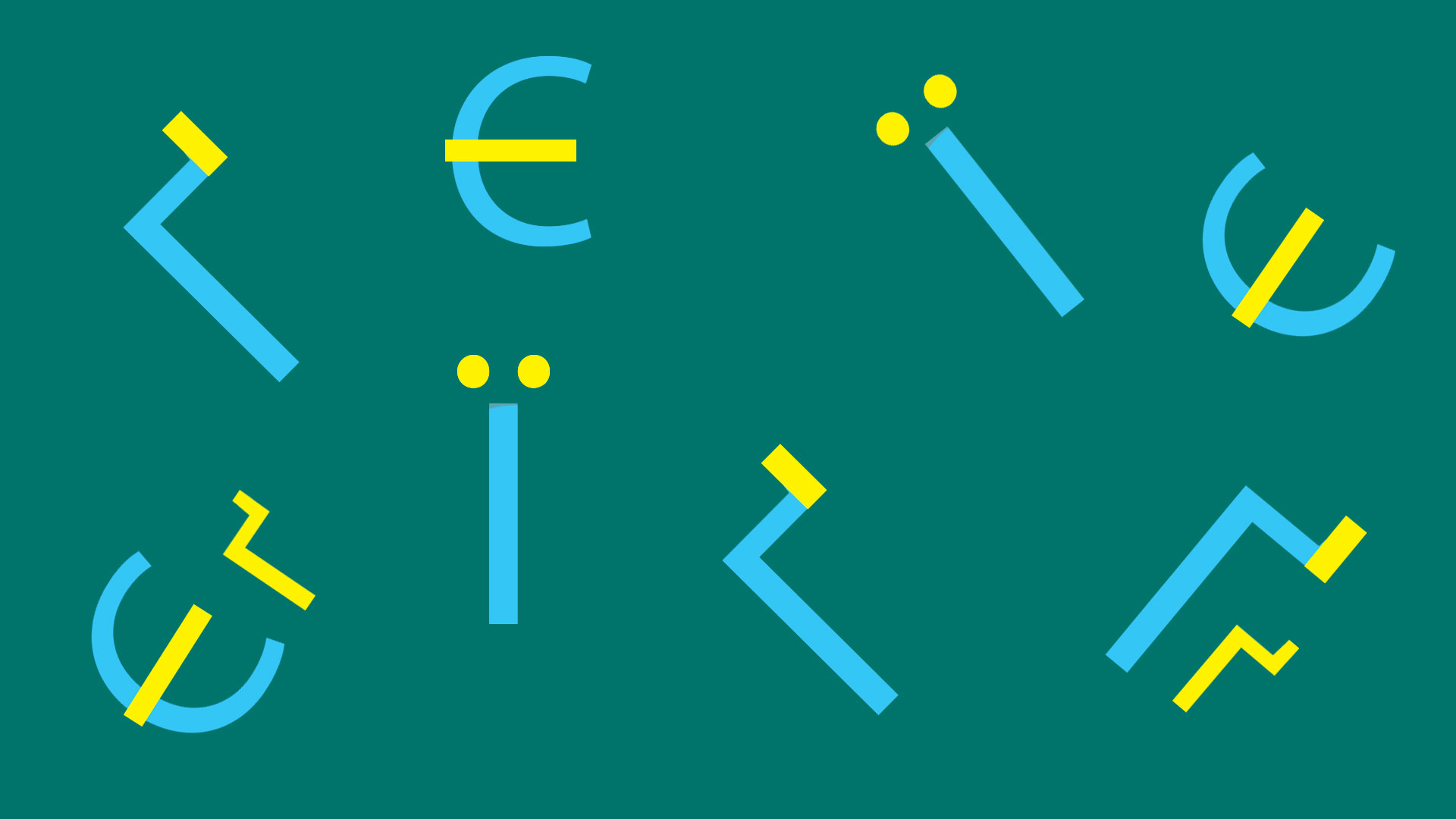
Take a closer look at the word УКРАЇНА. Notice the two dots above Ї? This is one of the most recognizable features of Ukrainian writing. Along with Ґ and Є, it gives the 33-letter Ukrainian alphabet its distinctive character. All three letters are rare among other Cyrillic alphabets and are strongly associated with the Ukrainian language.
Ґ represents the hard g sound (while the similar-looking Ukrainian letter Г sounds closer to h). Є is pronounced ye, while Ї represents yi.
These letters have also become recognizable symbols of Ukrainian cultural identity. You’ll find them featured prominently in the names and logos (for example, the popular bookstore chain КНИГАРНЯ Є and the cultural journal Ї). The letter Ї has even become a popular tattoo design, worn as a symbol of Ukrainian identity and pride.
Ukrainian poet Ivan Malkovych even dedicated a touching verse to preserving the tiny candle of the letter Ї and the crescent moon of the letter Є, capturing the affection these symbols inspire.
Explore the history and cultural significance of the Ukrainian alphabet, along with a beginner-friendly guide to its letters.
Since 2022, Ї has also become a symbol of resistance to Russian occupation. Ukrainian resistance members have painted it on walls and fences in occupied Mariupol and other cities, risking their freedom and even their lives to leave this small but powerful sign of defiance.
And one of these letters, Ґ, has a particularly fascinating history of its own.
Although Ґ had been used in Ukrainian writing for centuries, it was officially removed from the alphabet in 1933 as part of Soviet policies aimed at Russifying the Ukrainian language.
Under the new spelling rules, Ґ was replaced with Г, even though the two letters represent different sounds. As a result, words like ҐУДЗИК (button), ҐРУНТ (soil), and ҐАНОК (porch) were officially written with Г.
The letter finally returned to the official alphabet in 1990, after 57 years of absence. Its restoration was an important step in reclaiming Ukrainian spelling traditions that had been suppressed during the Soviet era.
There’s more to Ґ than meets the eye! In our Ukrainian Lessons Podcast episode in slow Ukrainian, we explore its complicated past, why it’s so uncommon today, and the curious story of its comparison to the gallows.
In Ukrainian, there are two ways to say “I will write“:
The second form is particularly interesting, as Ukrainian can express the future tense by adding special endings directly to the infinitive.
This produces verb forms like
Such a one-word future tense for imperfective verbs is exceptionally rare among modern Slavic languages, most of which use a separate auxiliary verb instead. Ukrainian has preserved both constructions, and both are widely used in everyday speech.
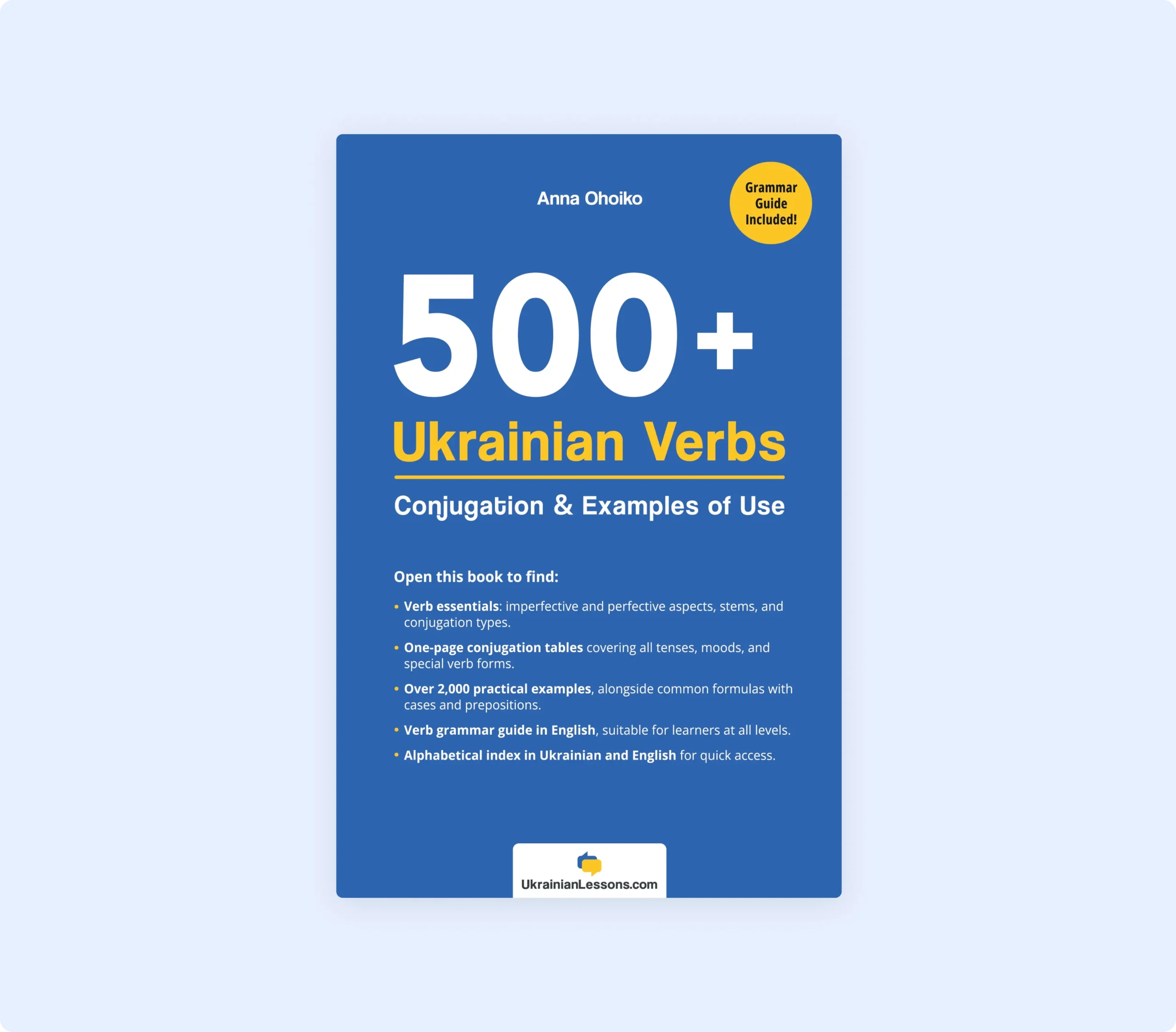
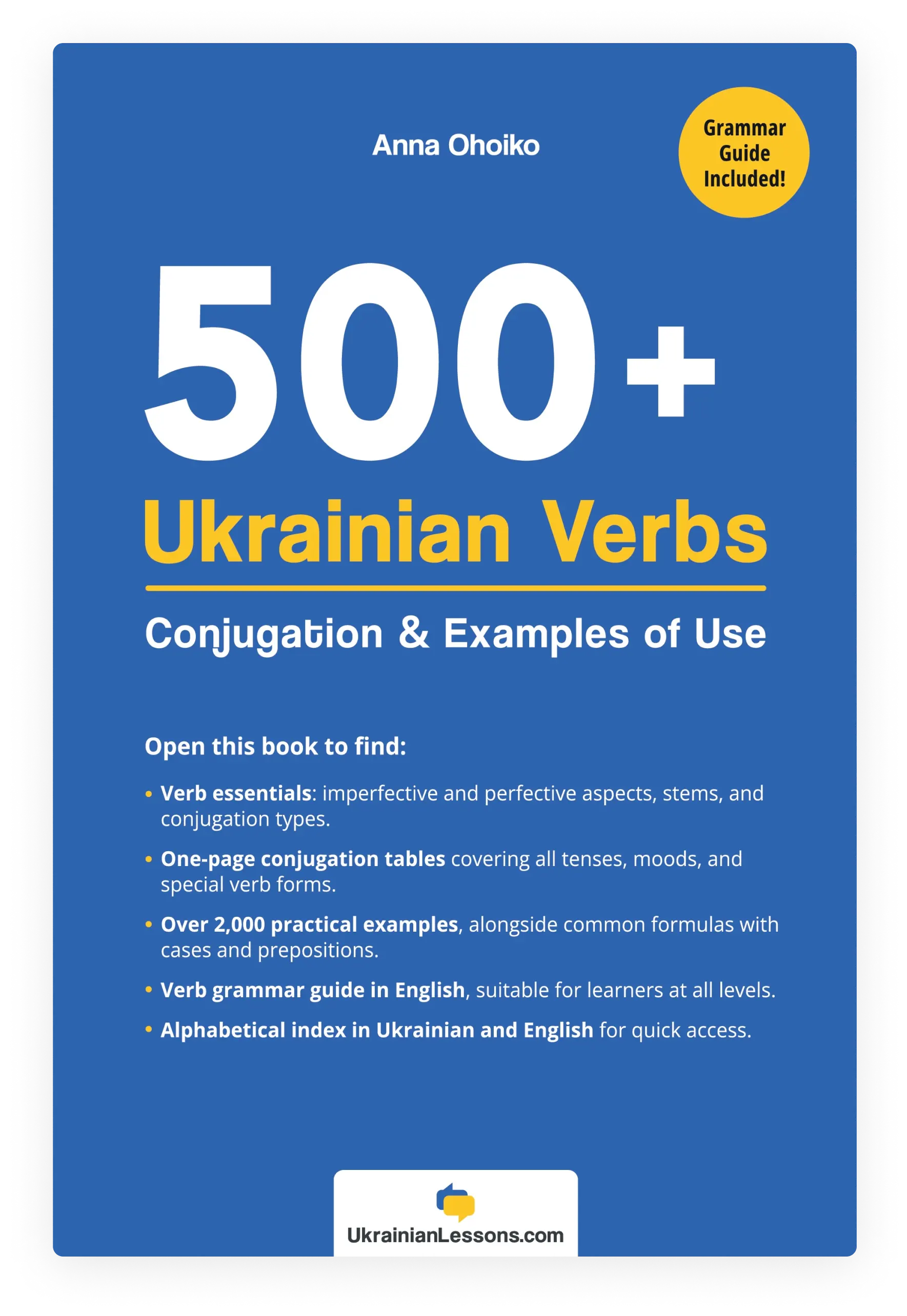
Want to get more comfortable with Ukrainian verb forms? Explore our 500+ Ukrainian Verbs: Conjugations & Examples of Use, featuring useful verbs, conjugation tables, and practical examples to help you use them confidently.
Have you noticed that Ukrainian sometimes uses У and В for “in,” or І and Й for “and“? There’s a reason for this: Ukrainian has a particularly developed tradition of МИЛОЗВУЧНІСТЬ (euphony), which helps make speech flow more smoothly.
For example, Ukrainians would naturally say У КИЄВІ (in Kyiv), but В ОДЕСІ (in Odesa).
Similarly, БРАТ І СЕСТРА (brother and sister) uses І between consonants, while ОЛЕНА Й АНДРІЙ (Olena and Andrii) uses Й between vowels.
These alternations help avoid awkward clusters of consonants or vowels. Although similar principles exist in other languages, Ukrainian has an especially well-established system of such changes, reflected even in its official spelling rules.
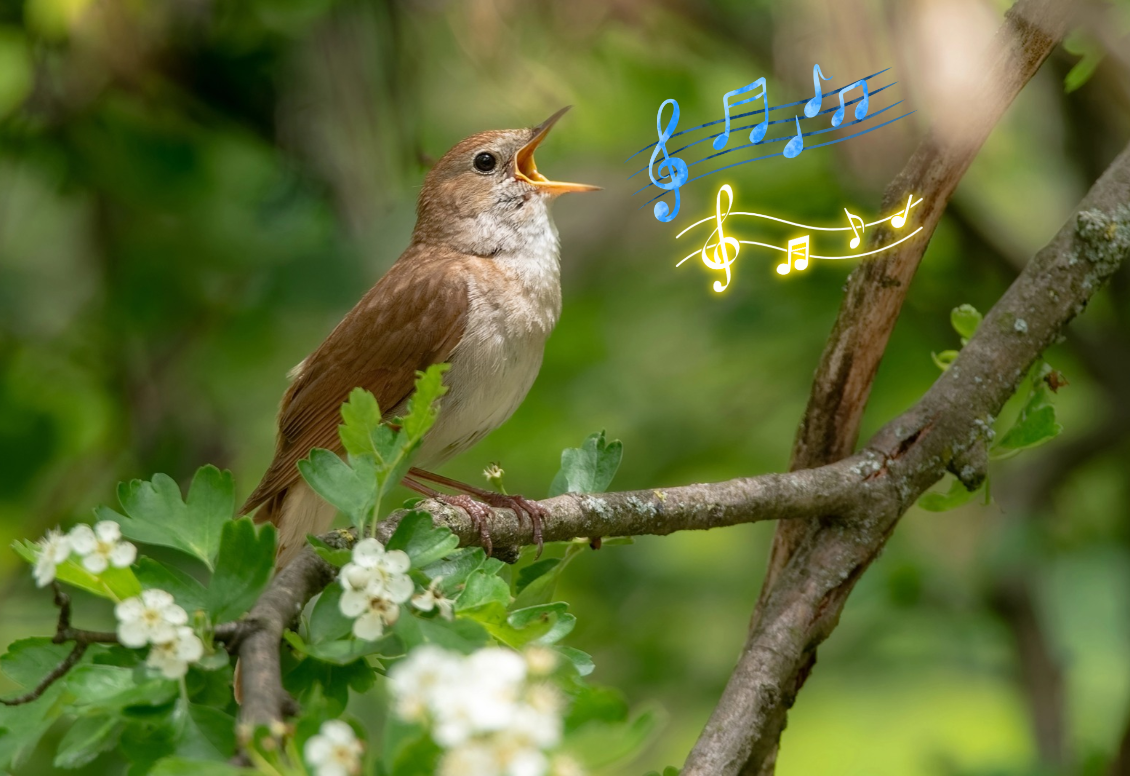
Ukrainian is also affectionately called СОЛОВ’ЇНА МОВА (the nightingale language), a reference to its melodic sound. СОЛОВЕЙКО (nightingale), a bird famous for its beautiful singing, is a beloved symbol of Ukrainian euphony.

Discover how Ukrainian euphony works in practice! Our guide explains when to use У vs. В, І vs. Й, and З vs. ЗІ vs. ІЗ, with clear examples to help your Ukrainian sound more natural.
Ukrainian has seven grammatical cases, which change word endings depending on their role in a sentence.
One of them is especially interesting: КЛИЧНИЙ ВІДМІНОК (vocative case).
Ukrainians use it when addressing someone directly. For example, ОЛЕНА becomes ОЛЕНО, МАРІЯ → МАРІЄ, and АНДРІЙ → АНДРІЮ!
Interestingly, not all Slavic languages have preserved the vocative as a separate grammatical case. Ukrainian shares this feature with languages such as Polish and Czech, while standard Russian, for example, has six cases and no regular vocative case.
New to Ukrainian grammatical cases? Explore our beginner-friendly guide to learn why nouns, adjectives, and other words change their endings, with clear explanations and practical examples.
Ukrainian has seven grammatical cases, which affect nouns, adjectives, pronouns, and numerals. Depending on their role in a sentence, these words change their endings. Sometimes, however, the changes go even further, affecting the sounds inside the words themselves!
Take КІТ (cat), for example. In the genitive case, it becomes КОТА. The same happens with
These alternations between І and О / Е developed through historical sound changes and are particularly characteristic of Ukrainian.
Consonants can transform, too! In the dative and locative cases, for instance,
All these transformations might seem confusing at first, especially if you’re new to Ukrainian grammar. But don’t worry! They follow established patterns, and with a little practice, you’ll begin to recognize the logic behind them and use them naturally.

Love comes in many forms, and Ukrainian has two verbs to express different shades of this feeling: ЛЮБИТИ and КОХАТИ.
ЛЮБИТИ is the more universal word. You can say
КОХАТИ, meanwhile, is reserved for romantic love. Я ТЕБЕ КОХАЮ is a heartfelt declaration of love to someone special, while КОХАННЯ refers specifically to romantic love as a feeling.
Interestingly, Я ТЕБЕ ЛЮБЛЮ can also express romantic feelings, so the distinction isn’t entirely strict. Still, КОХАТИ carries a particularly strong romantic meaning.

Discover the subtle differences between some of the most romantic Ukrainian words: любов and кохання, любити and кохати. Anna explains these distinctions and more in a special 5 Minute Ukrainian episode!
СУРЖИК (Surzhyk) is a form of mixed speech that combines elements of Ukrainian and Russian, including vocabulary, grammar, and pronunciation. It varies across regions and speakers, so there’s no single, fixed version of it.
Surzhyk reflects Ukraine’s complex linguistic history, particularly prolonged contact with Russian and the effects of Russification policies.
Attitudes toward it vary. Some consider it incorrect Ukrainian, while linguists recognize it as a fascinating example of language contact. For many Ukrainians, Surzhyk has long been a natural part of everyday communication.
Curious to hear СУРЖИК in action? Explore this blend of Ukrainian and Russian with real-life examples and explanations in our advanced Ukrainian Lessons Podcast episode!
In Ukraine, a person’s full name often has three parts: a first name, a surname, and ПО БАТЬКОВІ (patronymic), a special name derived from their father’s first name.
For example, if a father’s name is ПЕТРО (Petro), his children might have the patronymics:
Patronymics are a familiar part of Ukrainian life. You’ll often find a separate field for them in official forms and applications. They’re also traditionally used as a respectful way of addressing people in certain professional settings. For example, students might call their teacher ОЛЕНО ПЕТРІВНО! (Olena Petrivna), using the vocative case.
Although similar naming traditions exist in several other countries, the regular use of patronymics is relatively uncommon worldwide. In Ukraine, the custom remains widespread, alongside other long-established forms of polite address, such as ПАН (Mr.) and ПАНІ (Ms.), which are becoming increasingly popular.
Ukrainian has an impressive variety of diminutive and affectionate forms, used to express warmth, tenderness, or simply make something sound smaller or cuter.
For example,
Ukrainian has numerous suffixes for creating such forms, including -ИК, -ОЧК-, and -ЕНЬК-, and they’re widely used in everyday conversation.
Want to learn more about Ukrainian diminutives? Join Khrystyna on a visit to ЯРМАРОК (a fair) in Ukrainian Lessons Podcast Episode 93 and discover how diminutive and affectionate words are used in everyday Ukrainian!
It is also common to use augmentative forms that emphasize size. For instance, КІТ can become КОТИЩЕ (a huge cat), while ВЕЛИКИЙ (big) can turn into ВЕЛИЧЕЗНИЙ (enormous). Another expressive example is ЗДОРОВЕННИЙ (huge).

These forms make Ukrainian particularly expressive, allowing speakers to add affection, humor, or emphasis with just a few extra letters.
***
We hope you found a new favorite fact on this list.
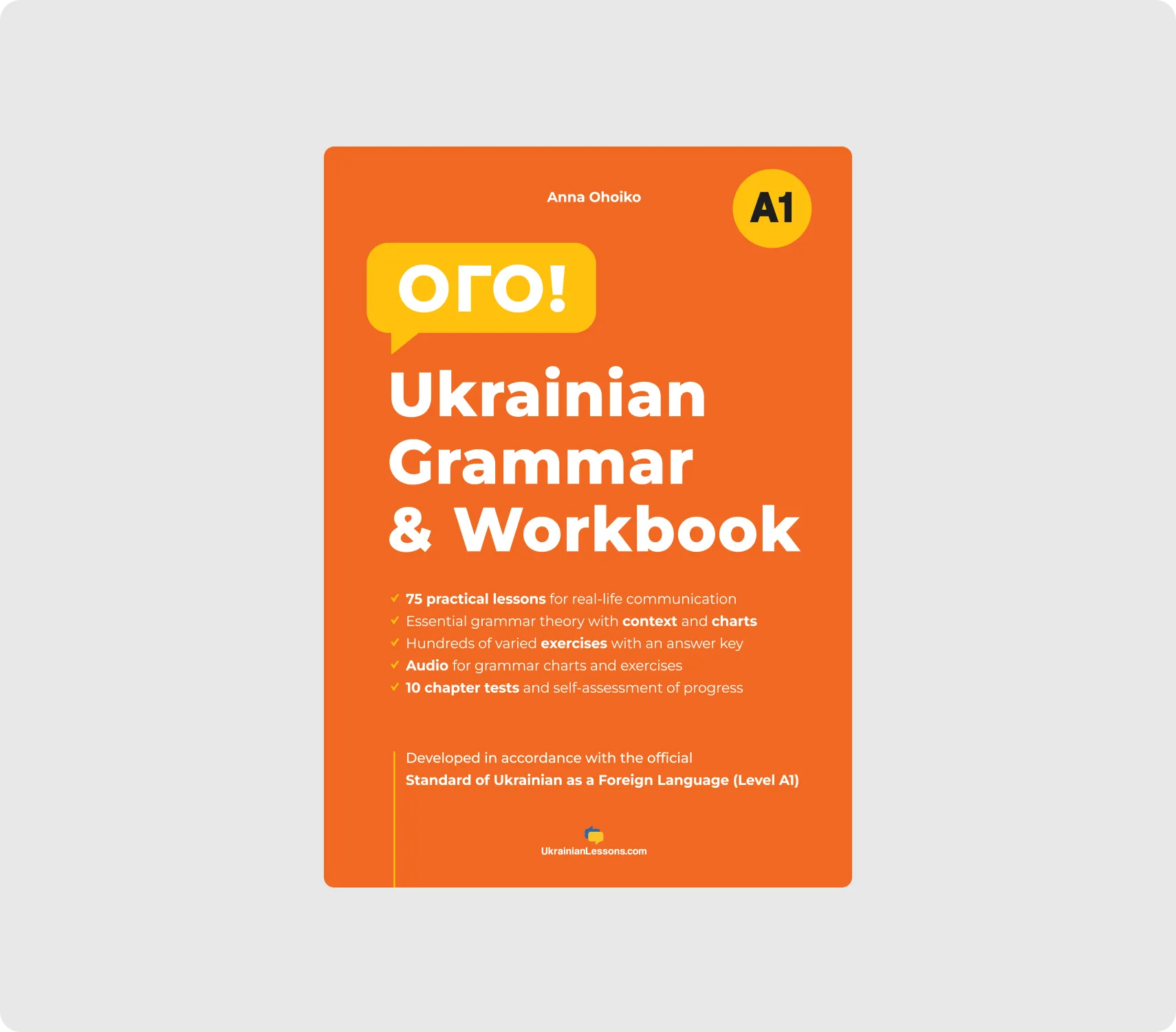
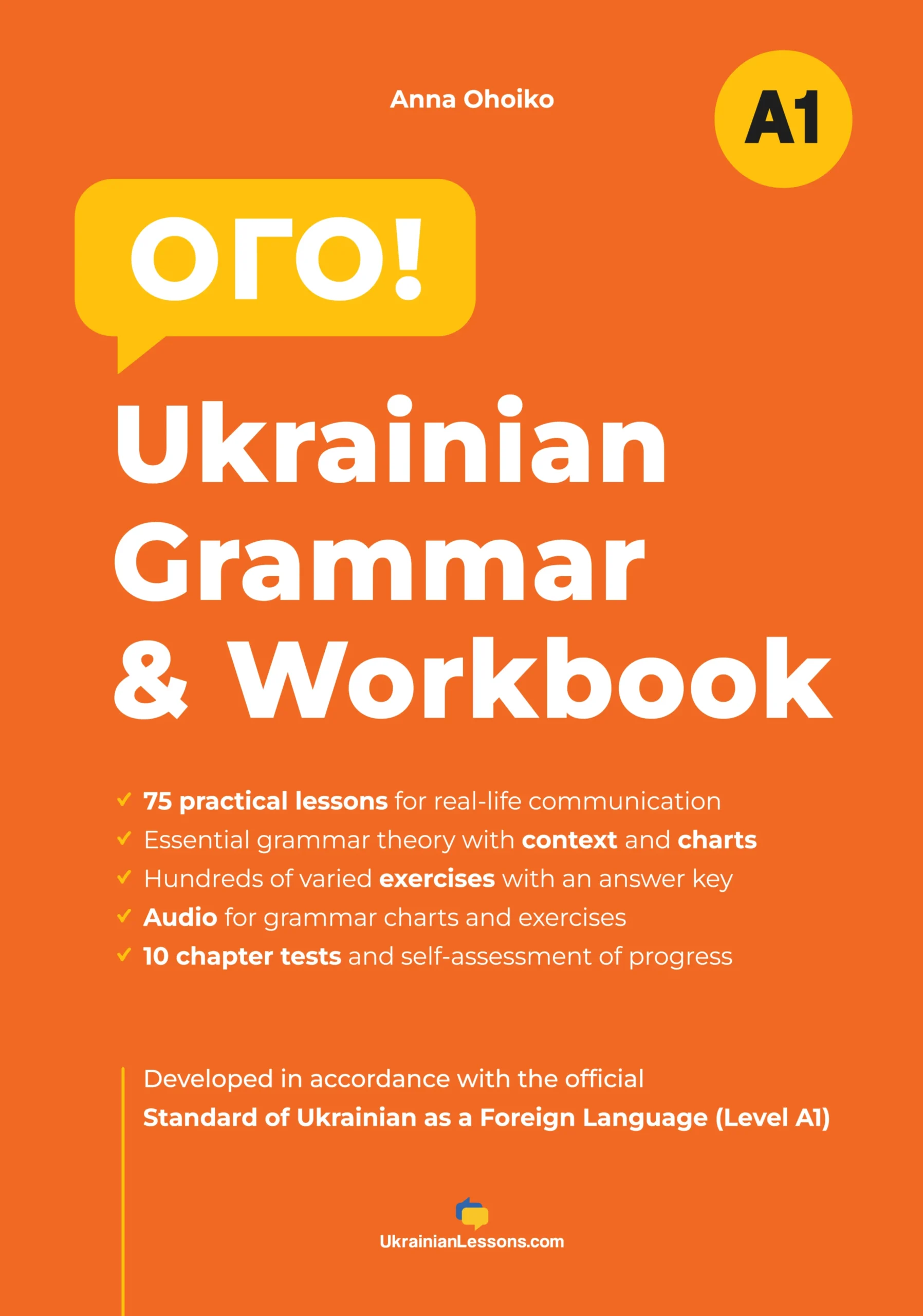
Curious how Ukrainian grammar works? A good place to start is Ого! Ukrainian Grammar & Workbook (A1) by Anna Ohoiko. It walks you through the basics of Ukrainian grammar in 75 short units, from the alphabet to cases and verbs. After each explanation come exercises for practice, many of them with audio.

For verbs, keep 500+ Ukrainian Verbs: Conjugations & Examples of Use close at hand. It has full conjugation tables for hundreds of the most common Ukrainian verbs, along with example sentences, translated into English, that show which cases and prepositions each verb takes. The book also includes a detailed grammar guide to Ukrainian verbs.