
.jpg)


has been added to your cart




There’s a Thursday in May when half of Ukraine, and a surprising amount of the rest of the world, shows up to work in an embroidered shirt.
The shirt is called ВИШИВАНКА (vyshyvanka). It predates Christianity in Ukraine by a long stretch, and back when it first appeared, the patterns on it were more closely associated with magic than fashion.
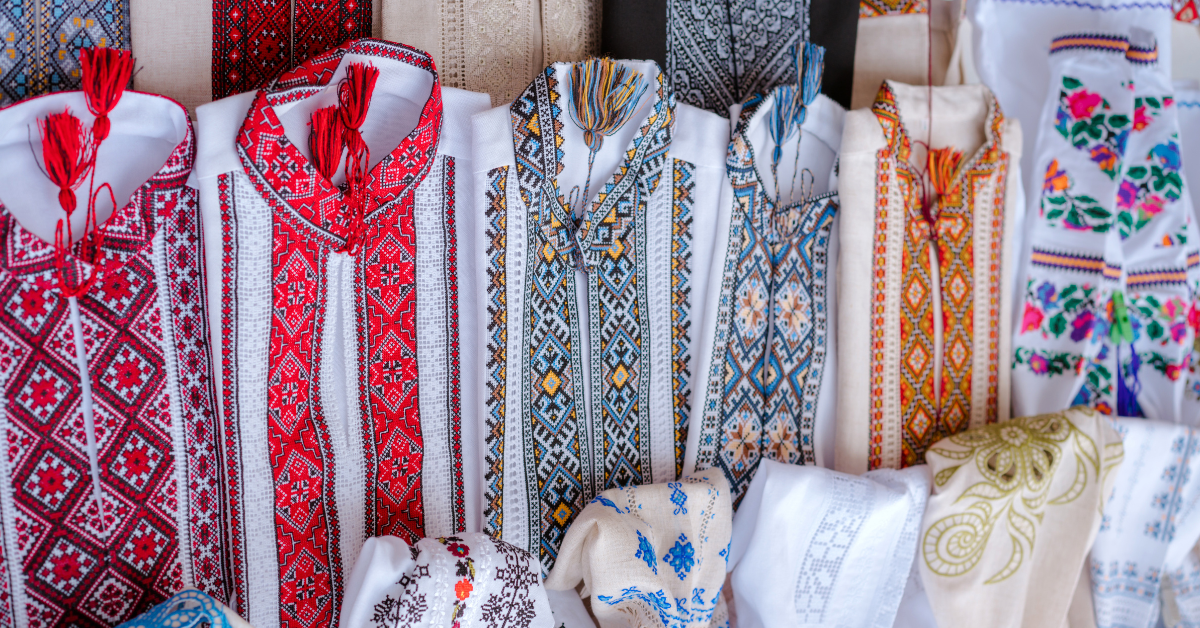
Every shape stitched into the collar and cuffs meant something specific, and many of those meanings have to do with keeping the wearer safe, healthy, and on good terms with the sun.
A thousand years on, the shirt is still around and more loved than ever. Read on for the meanings behind Ukrainian vyshyvanka patterns, how they shift from region to region, and the story of how Ukrainian vyshyvanka got its own holiday.
Long before it became a fashion piece, the vyshyvanka was ОБЕРІГ (amulet) — a kind of wearable protection (at the collar, the cuffs, and the hem).
Though Ukrainian superstitions may seem odd, they are an important part of our life. Here are 7 Ukrainian superstitions that you are likely to encounter in Ukraine (with interesting insights into Ukrainian culture)!
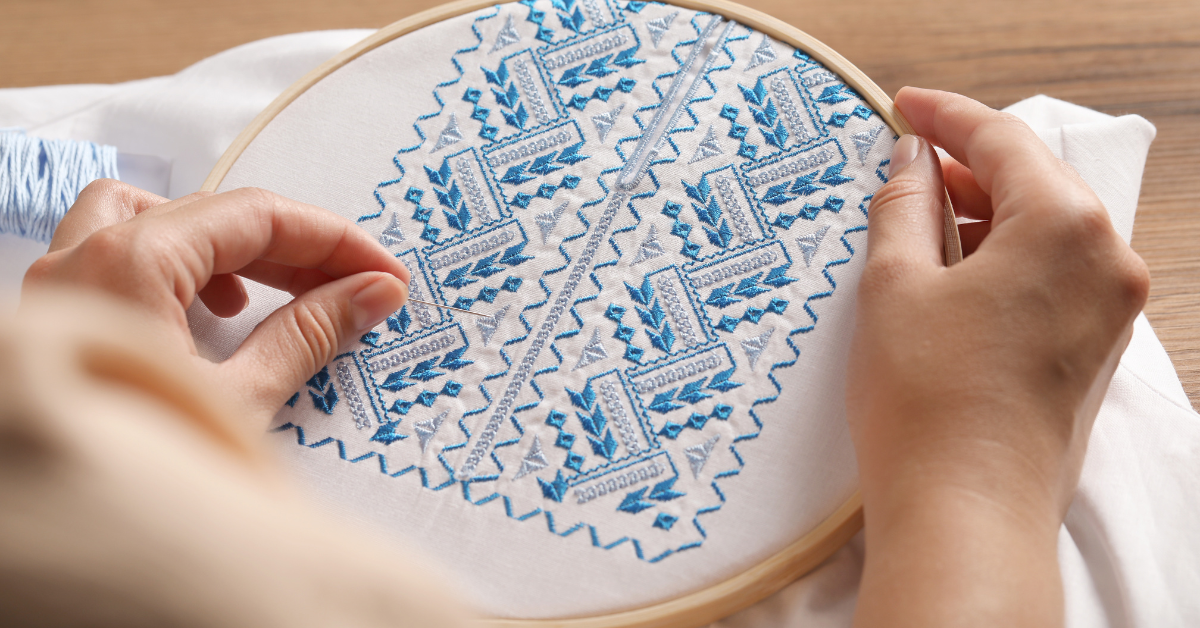
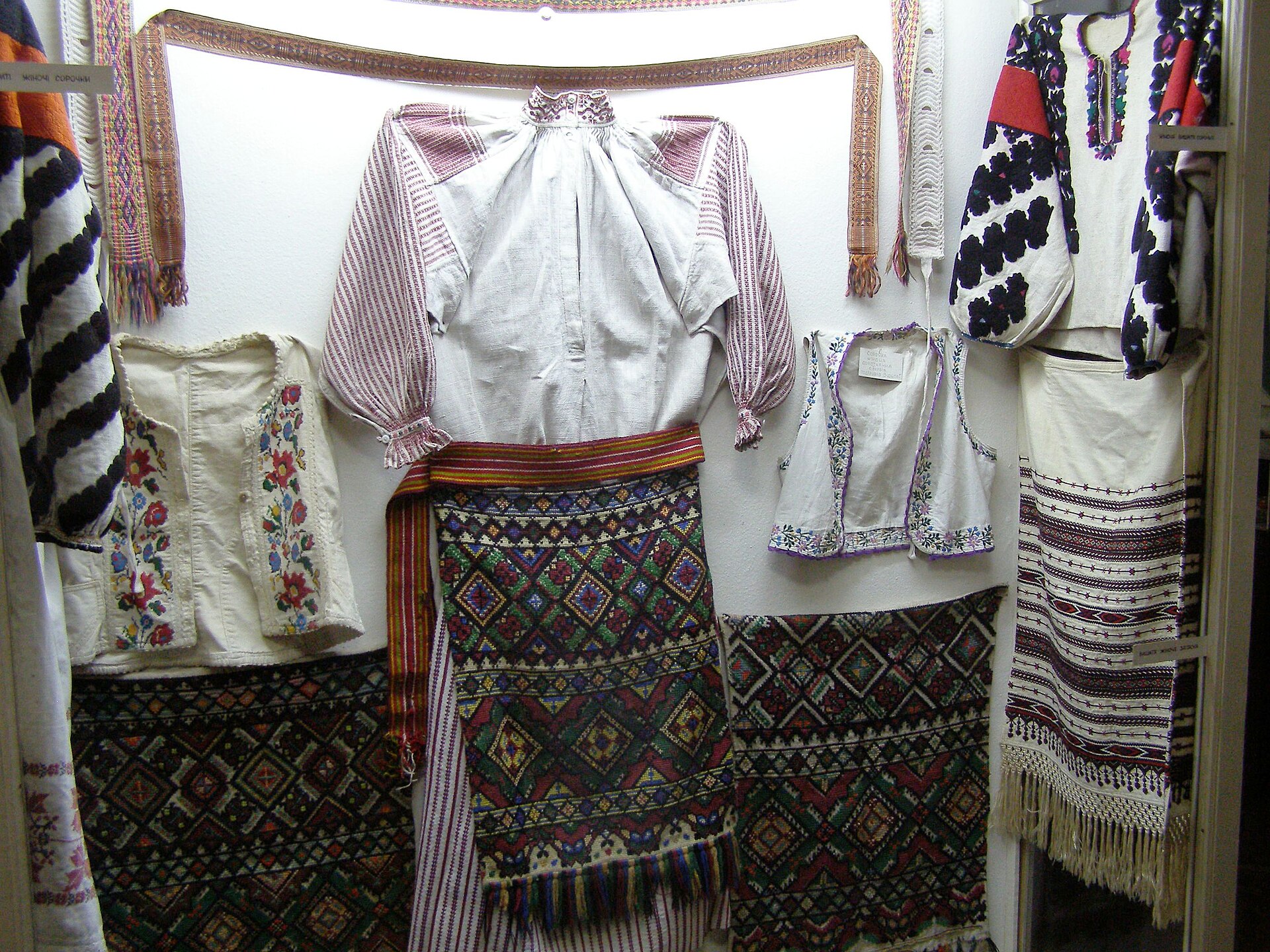
It wasn’t an everyday shirt. Ukrainians wore plain, undecorated ones for daily work, and saved the decorated ones — which could take years to make — for weddings, holidays, church, and important family moments.
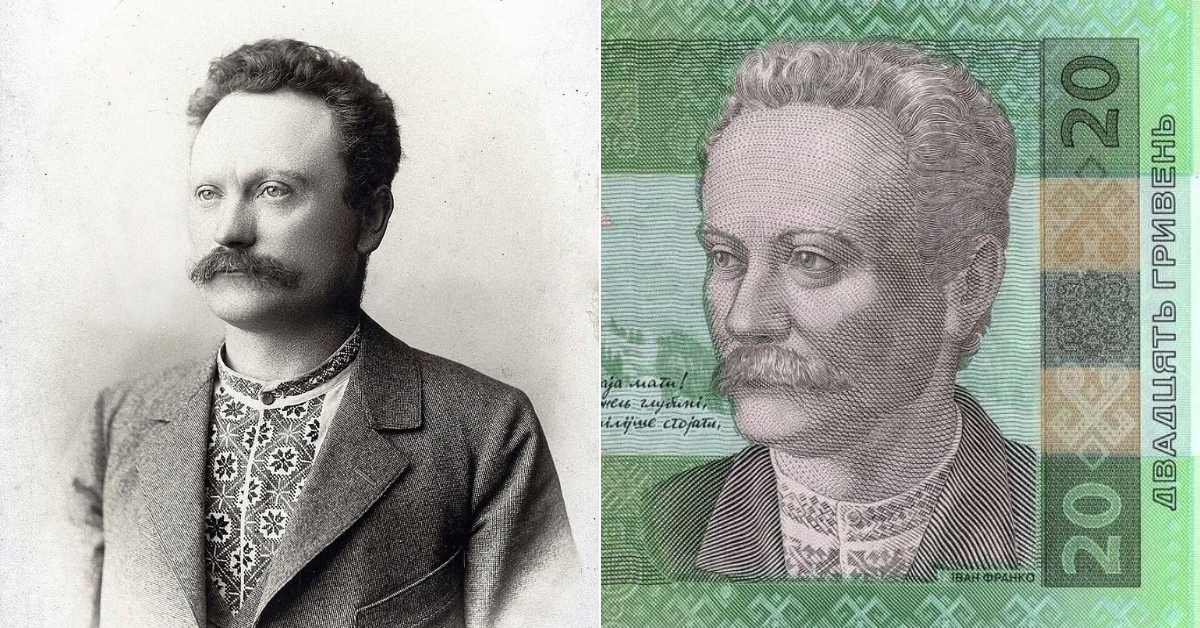
Ukrainian vyshyvanka stayed in folk dress for most of its history. Among others, it took ІВАН ФРАНКО (Ivan Franko), the great Ukrainian writer, to pull it into the modern wardrobe — he wore one under his suit jacket, which is exactly how he’s painted on the Ukrainian currency — a 20-hryvnia (Ukrainian currency) banknote.
In Episode 158 of the Ukrainian Lessons Podcast in slow and simple Ukrainian, you will learn about Ivan Franko, a writer and intellectual who has a whole city named after him.
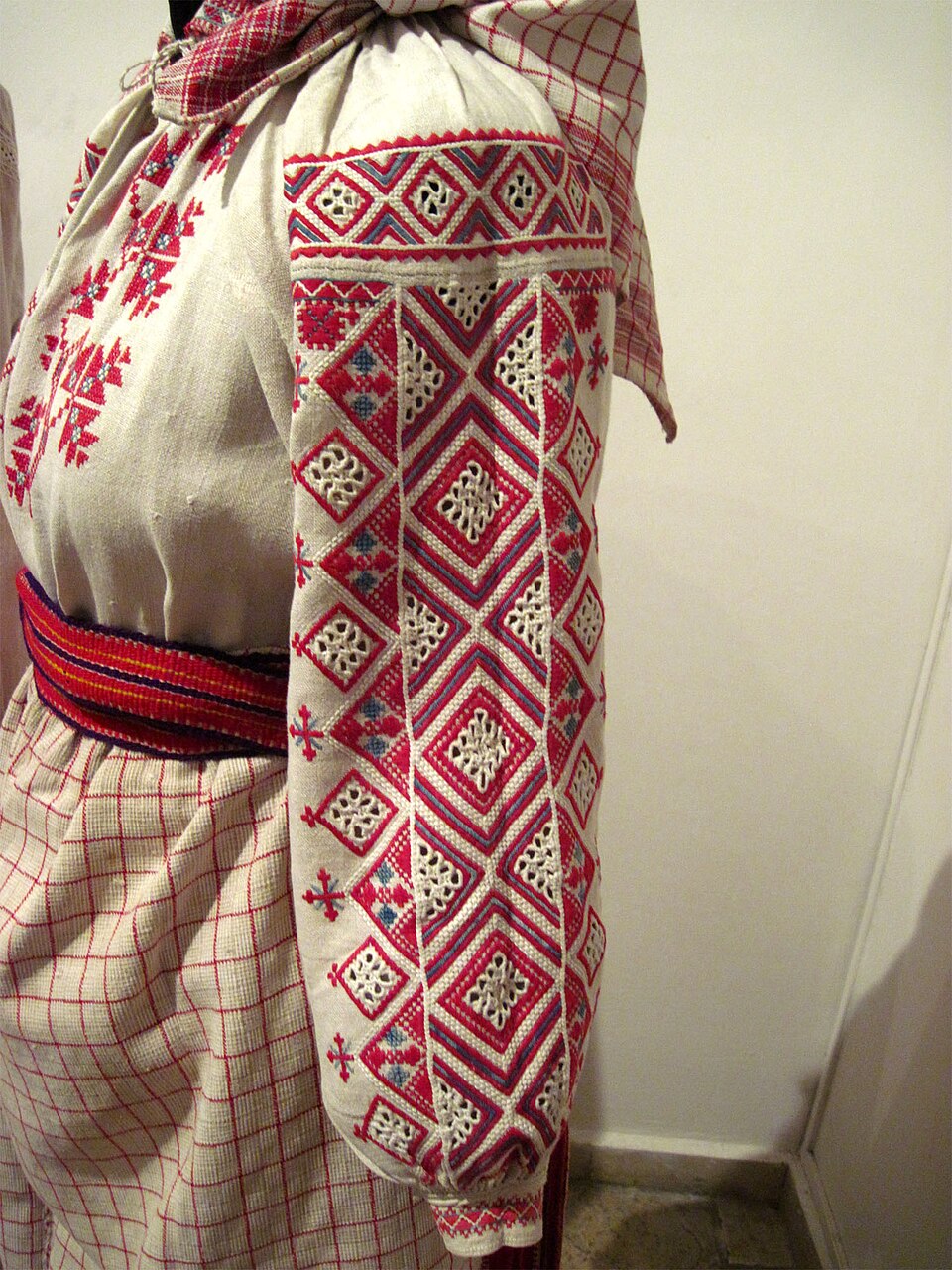
The shapes on Ukrainian vyshyvanka go back to a time when embroidery was meant to protect the person wearing it, and most of them carried very specific meanings. Here are some of the most popular patterns:
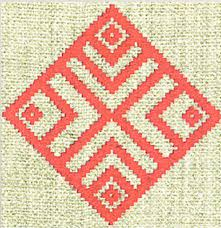
РОМБ is one of the most common and oldest shapes in Ukrainian embroidery. It stood for fertility and a sown field. A rhombus with a dot in the middle meant the field was already seeded — a wish for a good harvest or for a healthy child.
Variations of it appear on wedding shirts and on the clothes worn by women during pregnancy, as a kind of stitched-on blessing.
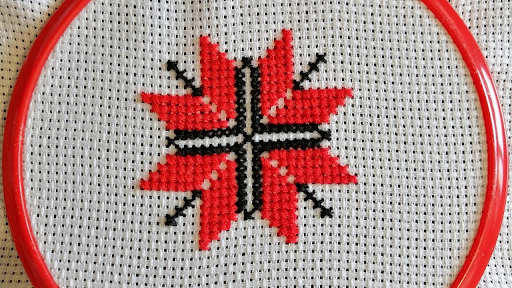
Long before Christianity, the straight cross was a solar symbol; the diagonal one — a lunar one.
The two overlap in an eight-pointed star, sometimes called the Star of the Mother — one of the most common motifs in Ukrainian embroidery.
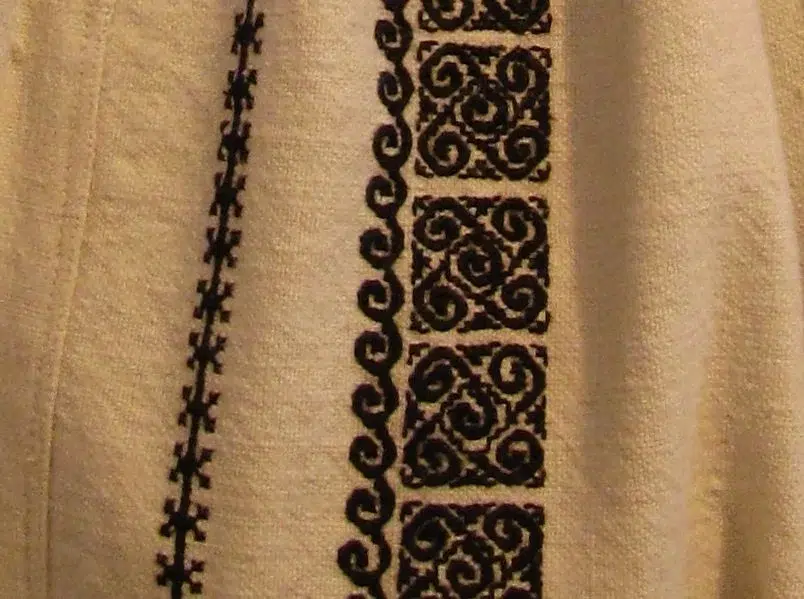
This is the wavy, winding line you’ll see running along sleeves and hems. The name comes from a spring ritual dance, which required moving in long, bending line. As an embroidered symbol, it stood for the flow of life, the journey, and time itself.
From decorated eggs to ancient spring dances — discover Ukrainian Easter traditions that are worth knowing.
Many Ukrainian regions developed their own distinctive way of embroidering the vyshyvanka.
You could group the patterns and styles practically by every Ukrainian region, but that gets complicated fast. To keep things simple, here’s a broader take:
The West — one of the most colorful corners of Ukraine, often with ten or more colors on a single shirt. The patterns are dense, featuring rhombuses, stars, zigzags, crosses. Buкovyna is famous for shirts so heavily embroidered they’re the heaviest in Ukraine.
The Center — the classic black-and-red embroidery most people picture when they think of a vyshyvanka. In Podillia, the Tree of Life shows up here more than anywhere else, along with stylized flowers, leaves, and vines.
The North and East — patterns are simple, geometric, mostly red on white. For example, the Slobozhanshchyna region mixes geometry with plant motifs and tends to leave more of the linen visible.
There are various Ukrainian dialects that are traditionally grouped into Northern, South-Western and South-Eastern Ukrainian dialects. Find out more about these three groups of dialects!
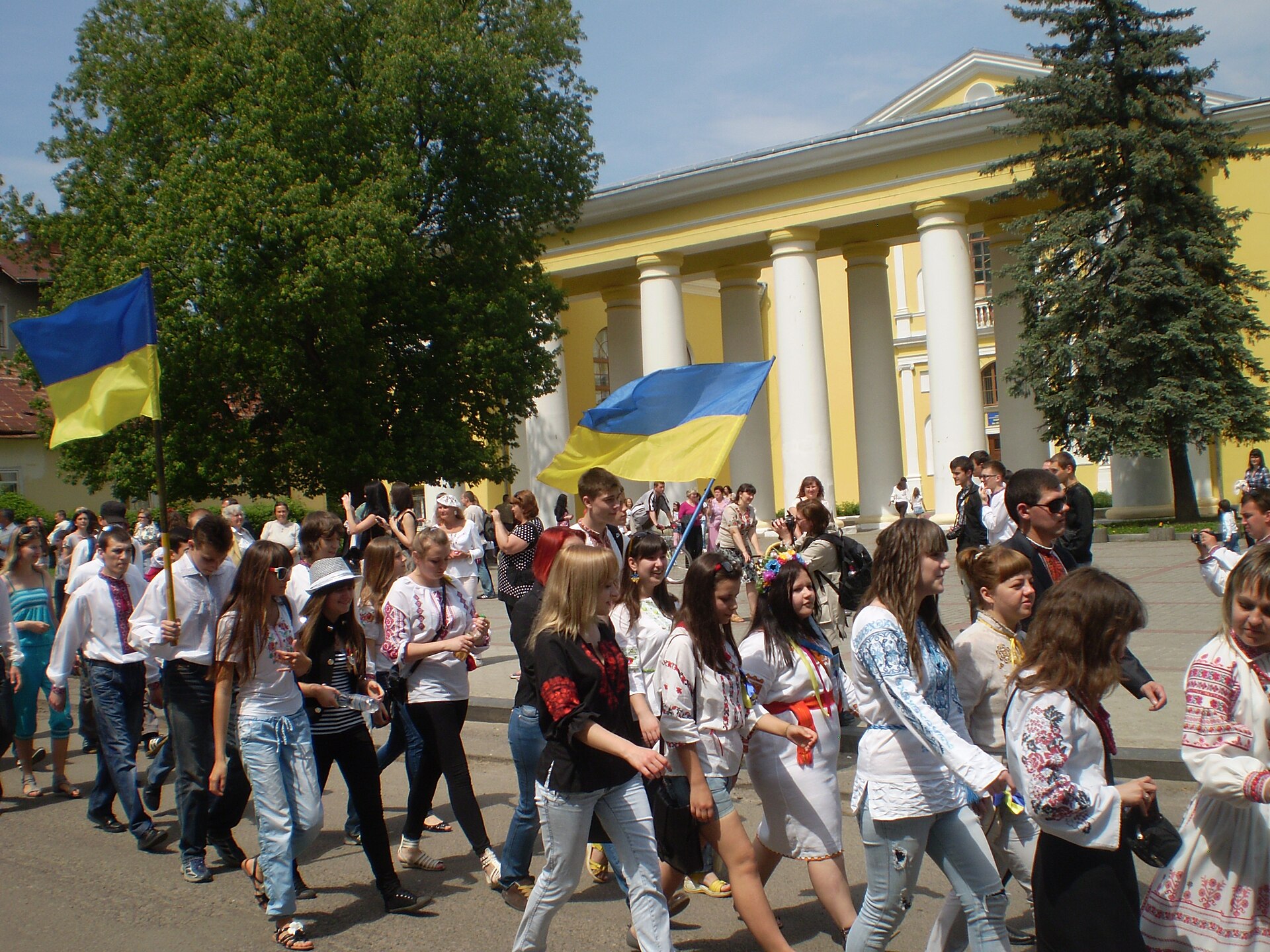
On the third Thursday of every May, especially if you’re in Ukraine, you’ll see vyshyvanka everywhere. This is because of the holiday called ДЕНЬ ВИШИВАНКИ, which is barely twenty years old.
It started in 2006 with one student in ЧЕРНІВЦІ (Chernivtsi) who wore a vyshyvanka to class on an ordinary day, and other students saw this as a good idea worth copying. Today, the holiday is marked in over 70 countries.
Recently, the vyshyvanka has become a fashion item. Ukrainian designer Vita Kin has put her version of it on Demi Moore, Dita von Teese, and Catherine Zeta-Jones. Houses like Jean-Paul Gaultier, Gucci, Valentino, and Dolce & Gabbana have all worked Ukrainian embroidery into collections.
In 2026, Vyshyvanka Day falls on May 21. If you own a vyshyvanka, that’s the day to wear it 😉
***
If you’d like to keep going, there’s more on the Ukrainian vyshyvanka and on Ukrainian symbols in general waiting for you:
🎧 ULP 3-113: Ukrainian Traditional Embroidery Masterclass — a podcast episode in intermediate Ukrainian on how to embroider vyshyvanka, with the imperative mood and new vocabulary along the way.
📝 15 Ukrainian National Symbols — a vocabulary and culture lesson on Ukraine’s main state and national symbols, with audio throughout.