"" has been added to your cart





The adjectival participle in Ukrainian (дієприкметник) is a special verb form that is formed from a verb but acts as an adjective, describing qualities:
It is also known as the participle adjective or verbal adjective.
In this article, we break down the basic rules on how different types of adjectival participle in Ukrainian are formed and used with common examples.
There are two types of the adjectival participle in Ukrainian — active and passive. Both of them are formed slightly differently but have one shared feature.
As adjectival participles function as adjectives, they all have the adjective ending -ИЙ, which also changes depending on the gender, number and case of the noun that goes with them:
Looking for the description and examples of all Ukrainian cases in one place? Here is our full Ukrainian cases chart ― feel free to save and print it!
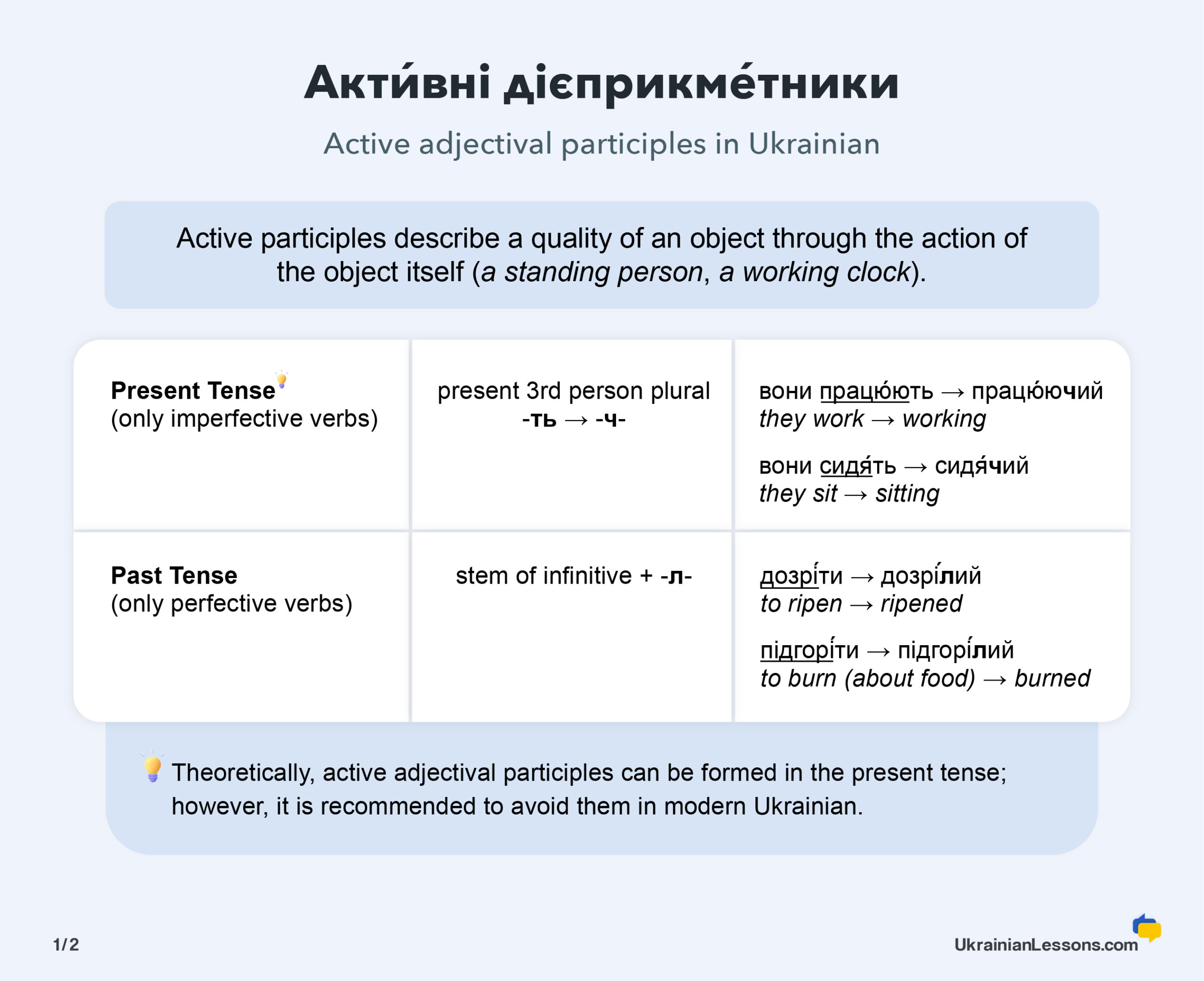
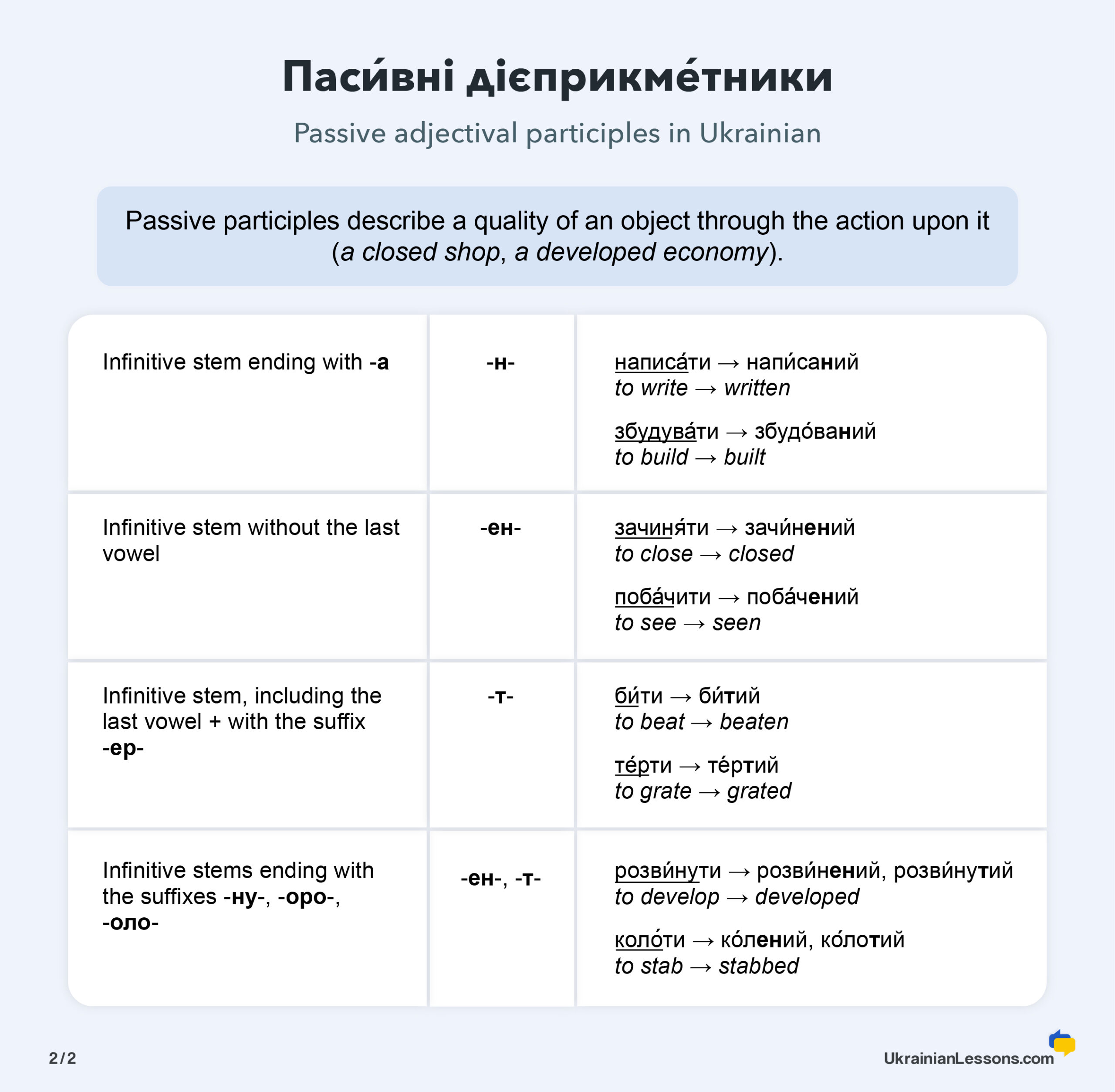
Ukrainian uses several suffixes to form different types of adjectival participles, depending on the verb stem and the type of participle. There are two main types: active and passive adjectival participles.
Keep in mind, however, that active participles are not very common in Ukrainian (see the next section for more details).
Explore the formation of adjectival participles in the tables below:
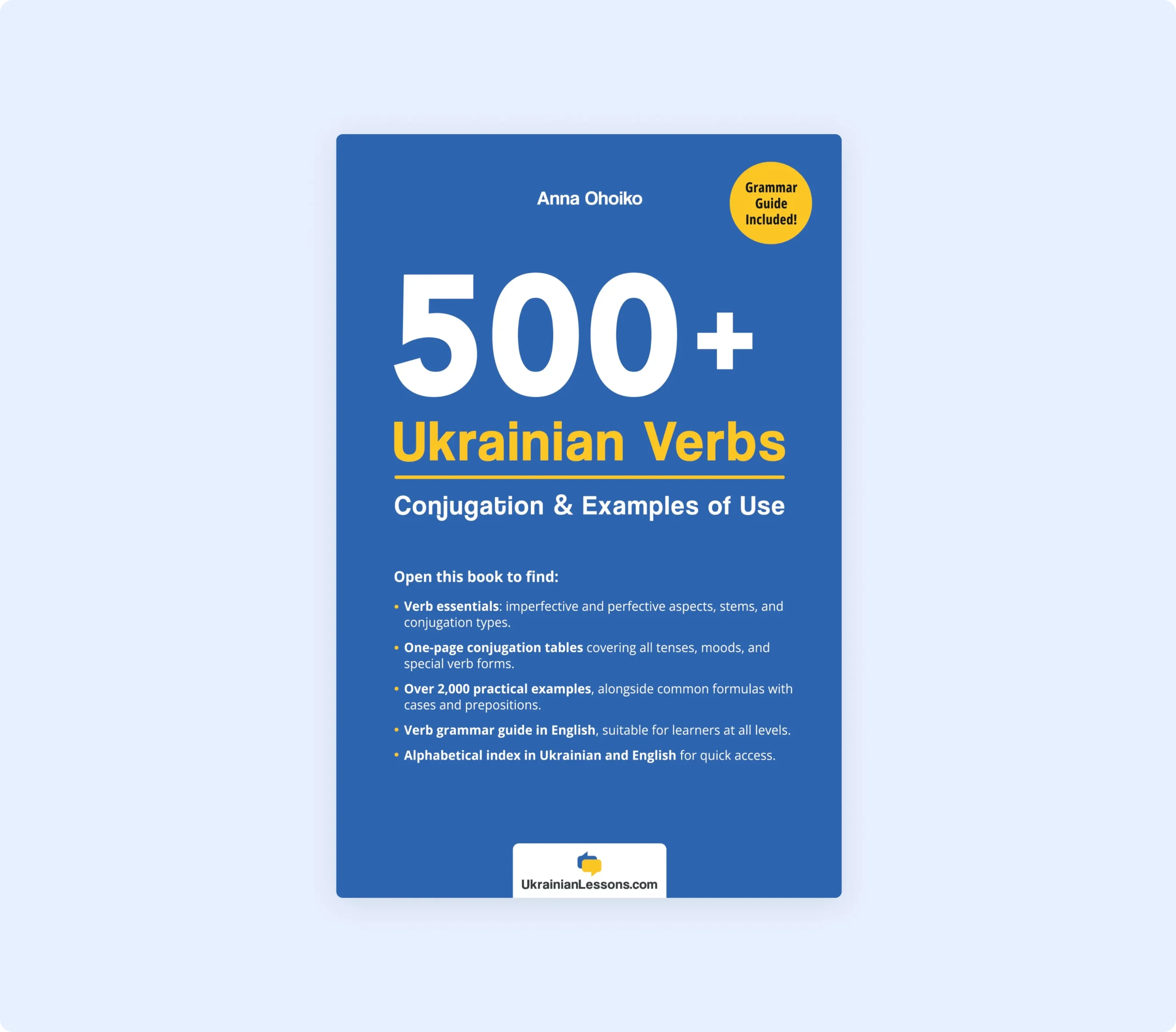
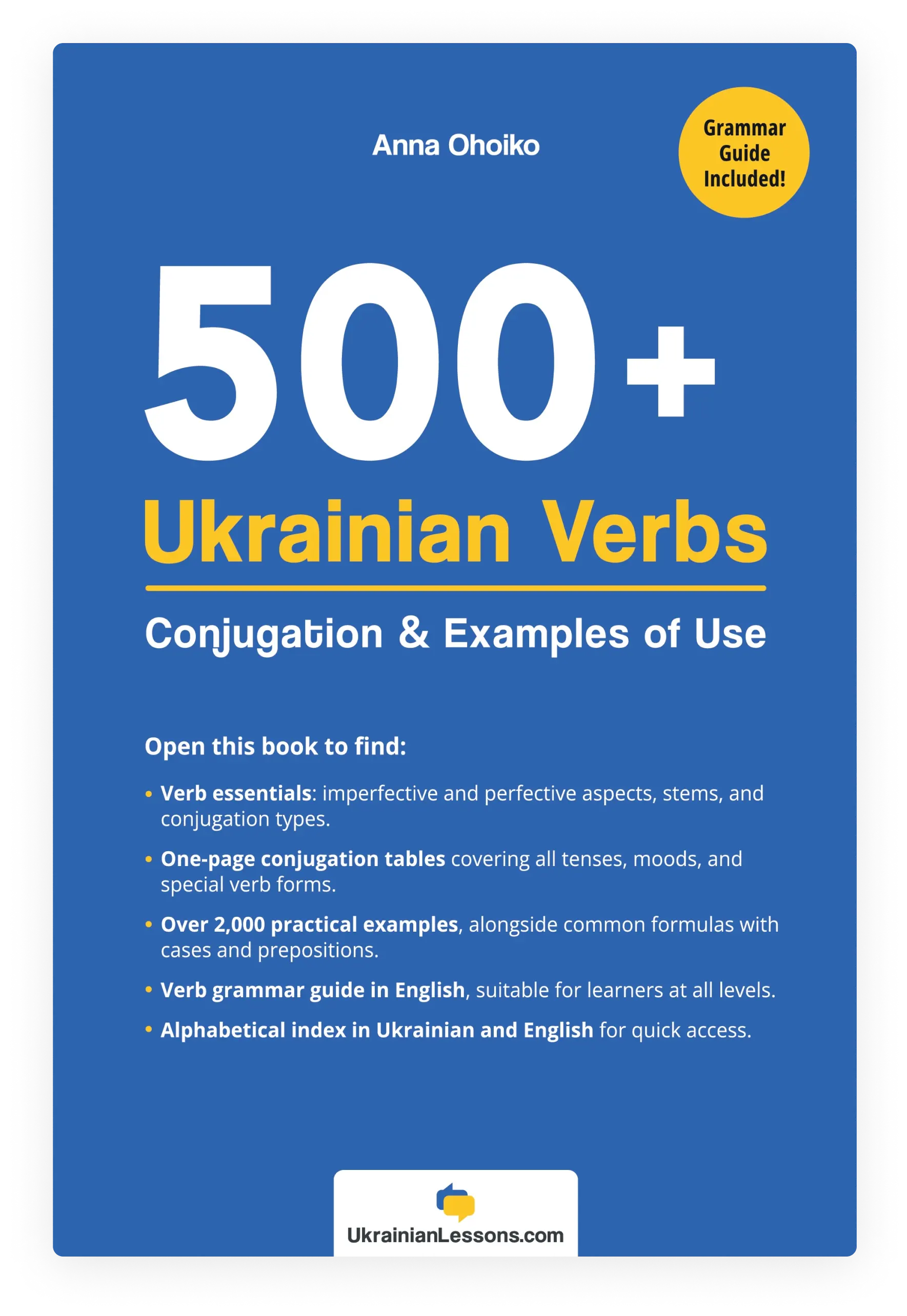
Want to explore more intricacies of Ukrainian verbs, including adjectival participles? Check out our 500+ Ukrainian verbs book with a detailed guide on the verb system of Ukrainian!
In modern Ukrainian, the use of active adjectival participles formed from imperfective verbs in the present tense (працюючий — working, сидячий — sitting) is limited. Such forms are unnatural in Ukrainian; however, they were spread and encouraged by the influence of Russian during the Soviet times.
Nowadays, they can sometimes be spotted, especially in old academic texts or literature for artistic effect. Yet, modern language experts recommend replacing them with nouns, adjectives or even clauses:
❌ виконуючий — ✅ виконувач, виконавець (performer, executor)
❌ бажаючий — ✅ охочий (willing, eager)
❌ працюючий студент — ✅ студент, що працює (working student)
What about some listening practice to practice adjectival participle in Ukrainian? Check out the Episode 108 of the Ukrainian Lessons Podcast, where we take a tour in Kyiv and learn about the participle in Ukrainian!
You’ve just explored the main ways to form adjectival participle in Ukrainian. While grammar tables are helpful, the real magic happens when you see these verbs in action!

Our 500+ Ukrainian Verbs book covers everything you need to know — verb aspect, tenses, moods (like the imperative and conditional), adjectival and adverbial participles, and more! Each verb comes with full conjugation tables and learner-friendly example sentences, crafted specifically to help you use them in real life. Make sure to check it out — it’s your all-in-one guide to mastering Ukrainian verbs!
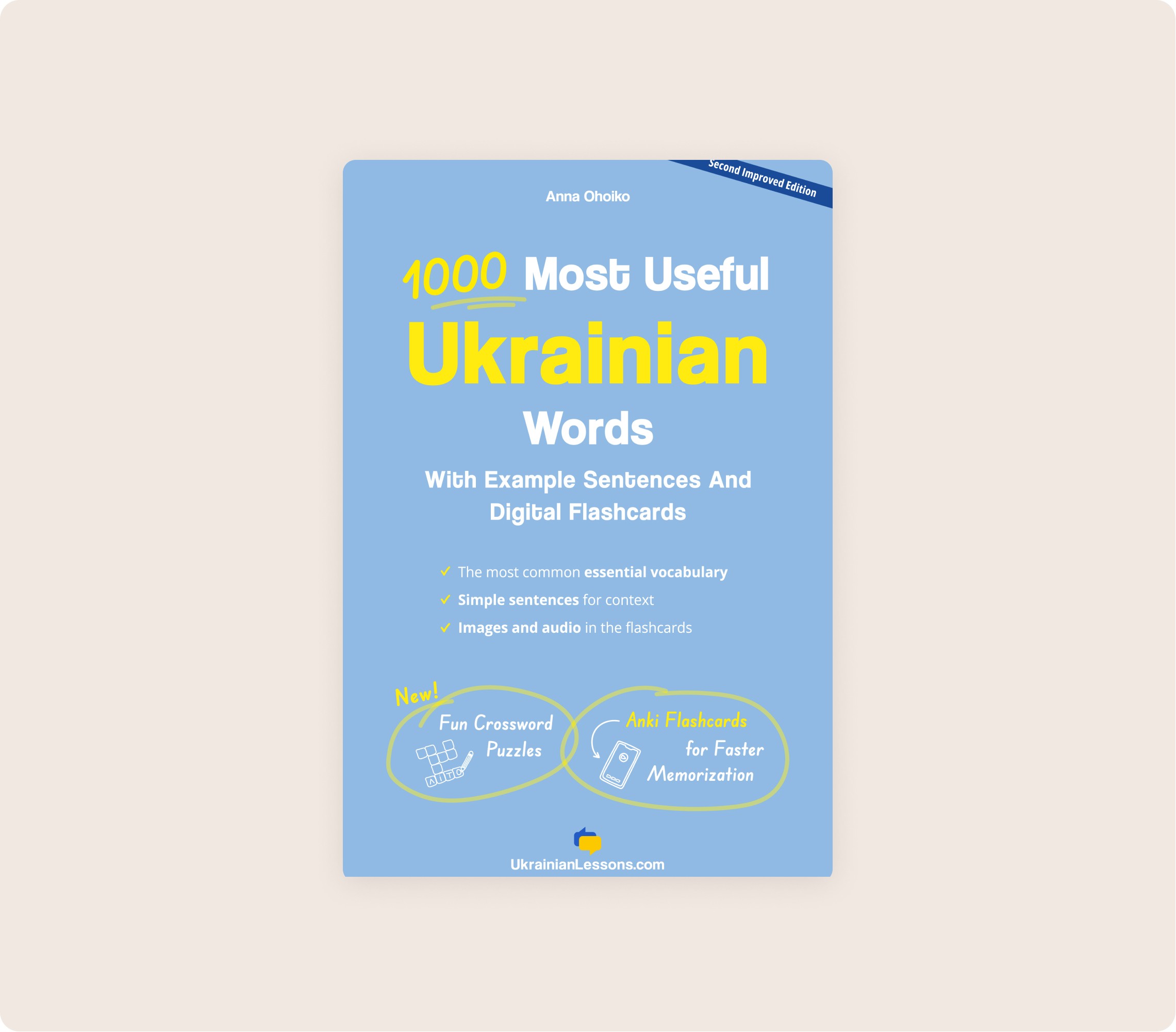
Looking for more great resources for learning Ukrainian? Check out our list of 1000 most common words in Ukrainian with interactive flashcards. You can also learn Ukrainian step by step wherever you are with our free Ukrainian Lessons Podcast.